
Clipxu
Platform
Solutions
News
View allK-12 multichannel alerts: measure coverage without confusing sending with receiptOne K-12 credential, separate capabilities: avoid universal permissionThree channels, three responsibilities: coordination is not dispatch or recordkeepingOne incident, one meaning: Michigan brings emergency vocabulary to every K-12 systemK-12 drills without real data: test response without rehearsing a breachBefore buying devices: test interoperability and operational evidenceFrom threats to operational learning: the new Louisiana K-12 cycleAI-enabled extortion in K-12: preserve evidence without amplifying harmK-12 cyber-physical response: a plan that works when the network does notK-12 safety beyond visitors: traceability for staff, contractors, incidents, and accessFederal SSE FAQ clarifies access control, panic buttons, and visitor managementKentucky strengthens safe and responsible K-12 AI procurementOklahoma formalizes mobile-alert vendors, PSAP links, and real-time coordinationCalifornia updates its school AI guidance and reinforces complianceCENTEGIX data highlights the weight of everyday K-12 safety incidentsMaryland turns school AI governance into policy, coordination, and procurementCanvas turns post-incident response into a contact and governance issueThe Canvas incident offers a K-12 lesson in operational continuityDOJ panic-alert case warns K-12 leaders about procurement governanceFederal SSE grants align visitor screening, locks, and emergency responseOhio makes AI policy an immediate K-12 obligationTennessee defines funding, workflow, and audits for mobile panic alertsMichigan brings AI into district policy and procurementTexas makes threat assessment a reportable obligation through SentinelUtah defines a minimum operating architecture for school safetyK-12 cybersecurity as a school safety layer: from IT to operationsOSDP in 2026: open Transparent Mode and Secure Channel 2 for K-12 access controlWhat an ANSI/ASIS standard adds to K-12 school security, and how to apply it to purchasing and operationsCritical incident mapping in K-12: from map to operational layer, lessons from IowaSinglewire 2026 report and a K-12 reading: the gap is not lack of technology, it is operationsGeorgia (HB 268): Alyssa's Alert, NG9-1-1, and school mapping as operational requirementsMississippi (SB 2498, 2026): from panic button to operational specificationOSDP in K-12: why Secure Channel + Verified changes the minimum access-control standardNIST opens an AI RMF profile for critical infrastructure: useful language for governing AI in school safetyPASS v7 and Digital Infrastructure: the new layer connecting access, video, panic, and IoT in K-12Third-party AI in school safety: an operational checklist to deploy it secure by default (2024-2025)Miami and the debate over funding security in private schoolsGovernance for AI + video in schools: from CCTV to assisted analytics without automated decisionsUtah and actionable response: wearable panic, PSAP, maps, and keys (UL 1037)West Virginia (HB 4798): Alyssa's Law and the move toward shareable safety dataAI video and access control: the convergence accelerating campus securityHow to choose school safety technology without falling into isolated purchasesSchool safety 2026: from panic buttons to orchestrated responseObservability and response: two key layers for school safety
AboutContact

Silent Panic Button

Discreet emergency activation from the Clipxu app with contextual alerts and policy-driven response options.
Silent Panic Button

Why it matters

In high-risk situations, staff may need to request help without drawing attention or escalating the threat.

Clipxu solution

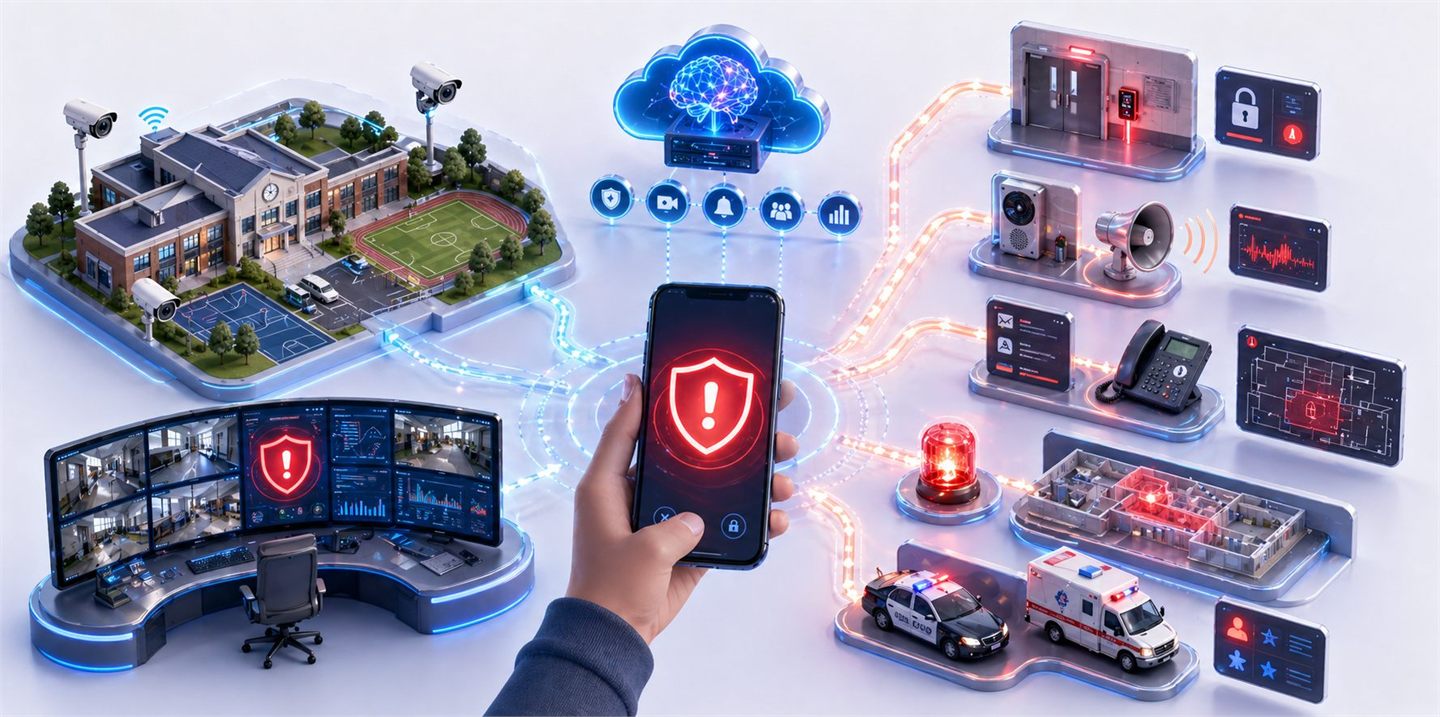
Clipxu provides a silent panic feature in the mobile app so authorized users can trigger a discreet emergency alert and linked safety protocols.

How it works

An authorized user activates the silent alert from the Clipxu app, which immediately shares context with predefined recipients and can launch automated response workflows.

Deployment model

Mobile app plus platform integrations for messaging, monitoring, and connected safety devices.

Key capabilities

  • Stealth activation designed for high-risk situations
  • Immediate alert dispatch to predefined recipients
  • Location and time context included with the alert
  • Can trigger broader protocols such as monitoring and door control

Ideal environments

EducationSchool administrationCampus security

Overview

The Silent Panic Button allows authorized users such as teachers, administrators, or security personnel to trigger an emergency alert discreetly, without drawing attention.

Key features

  • Stealth activation through the Clipxu mobile app using a discreet tap or hidden command
  • Immediate alert dispatch to school security staff, law enforcement, and emergency response teams
  • Automatic context sharing including exact location, time of activation, and AI scan results when available
  • No visual or audible cues on the device, helping the action remain unnoticed by people nearby

Smart protocol integration

Once triggered, the Silent Panic Button can activate a custom emergency workflow, including:

  • Live monitoring of surrounding areas through AI-enhanced video feeds
  • Locking doors in specific zones
  • Tracking the location of students and staff