
July 13, 2026
The official Oklahoma School Safety Security page no longer talks about panic buttons in abstract. He's talking about 11 trained providers and concrete functional requirements: integration with PSAP, called 9-1 and mobile activations, floor plans, call location and real-time situational updates. For K-12, the message is that alert technologies are evaluated by interoperability and not by marketing.
Summary
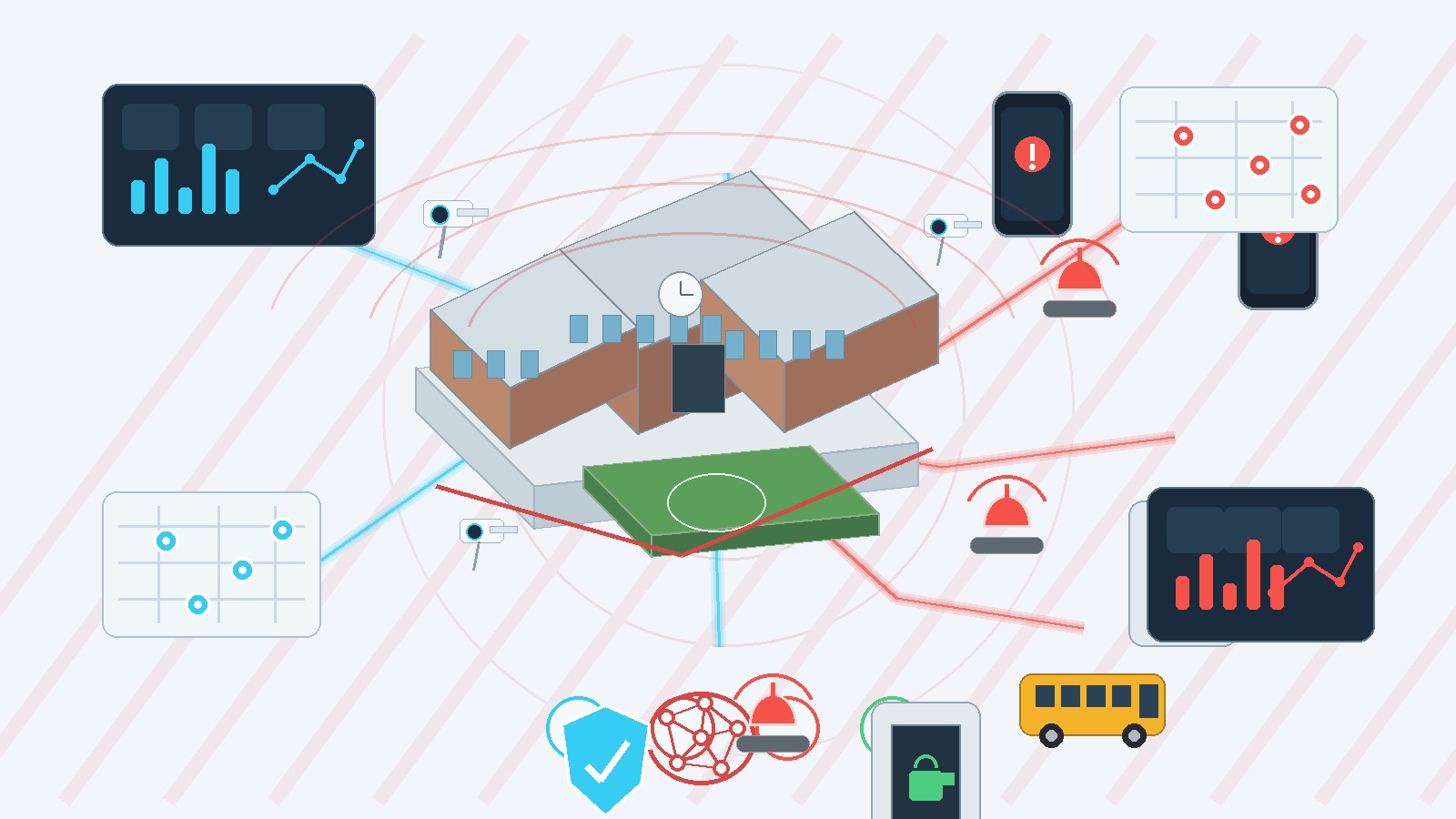
verified facts: The official page School Safety Security of Oklahoma State Department of Education indicates that the board approves 11 providers with whom districts can negotiate services of mobile panic button . The functional description of the site itself requires that these services connect emergency technologies for real-time co-ordination between agencies, integrate with the infrastructure of public safety advertising point (PSAP) to transmit calls 9-1 and mobile activations, automatically alert designated personnel, deliver floor plans and call location to emergencies, and allow real-time situational updates between school and first responders. The page appears as Last Modified on 2026-06-22 .
Interpretation: Oklahoma's pushing an important maturation: the panic button stops evaluating as an isolated app and goes on to evaluate as an interoperable layer of incident response.
Context
Facts (according to sources)
- The page describes approval as a result of entities that met required requirements and responded successfully to the RFI process.
- The functional language connects the tool with 9-1 , PSAP , maps, call location and multiagency co-ordination.
- The same page lies within the state area of School Safety and Security , but not as an isolated local or pilot experiment.
What should not be inferred
The approval of vendors does not prove that all districts have the same level of actual integration, training or coverage. Nor does it mean that all implementations are equivalent at response times, user experience or connectivity dependence.
Implications for K-12
- Specification matters more than brand. Floor plans, call location and PSAP integration are tougher requirements than a promise of "instant alert."
- Interoperability becomes a minimum purchase criterion. A school solution that isn't well connected with first responders loses its value.
- Visitor management and access monitoring become natural supplements. When the incident reached 9-1 with plans and location, it also gain value to know who entered, where and under what permits.
- Training remains crucial. No state list replaces operational practice, simulations and local ownership.
How it relates to Clipxu
Acts (about Clipxu): Clipxu works precisely on the cape where alerts, location, IoT, accesses and observability can converge.
Editorial Positioning (propose): using Oklahoma to defend a simple thesis: in K-12 security, an alert is best best after arriving with operational context . Clipxu can be different if you talk about response orchestration and not just alarm activation.
Sources
- Oklahoma State Department of Education - "School Safety Security" - https://oklahoma.gov/education/services/school-safety-security.html - Last Modified on 2026-06-22 ; consulted 2026-07-13 .