
July 13, 2026
The Department of Education did not launch a new technology, but if it did something more useful for procurement: at FY 2026's FAQ School Safety Enhancement Program I detailed that measures such as electronic accesses, panic buttons, kiosks of visitor management, cabling, cameras and secure vestibules can be entered as an eligible expense under minor remodeling. For K-12, that reduces ambiguity between physical security, light work and public financing.
Summary
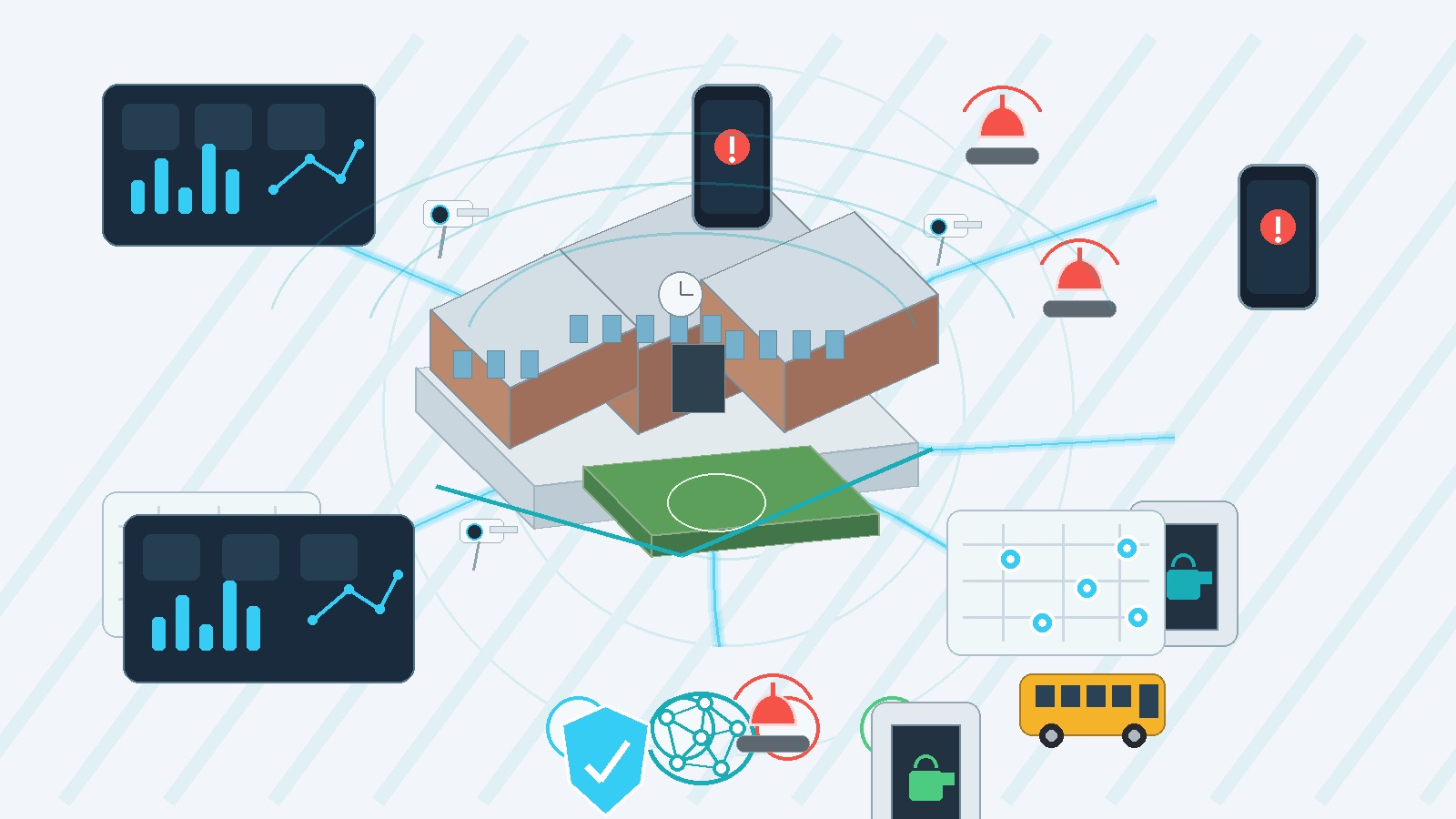
The official FY 2026 School Safety Enhancement Program Competition (84.184A) indicates that within Absolute Priority 2 , the funds can cover some minor remodeling and list concrete examples: inner classroom door locks security cameras , access control systems as bad readers or electronic entrand systems, panic buttons , and information and information and information technologies and information and information and information and information technologies and information and information and information and information and information and information about information about and information about information about information and information and information about information and information about information about and information about information about and information about and information about information about information about information and information about information about and information about information about information about information about information and information about information about information about and information about and information about information about and information about information about information and information about information about information about information about information about information about information about information about and information about information about information about information about information about information about information about information about information about information about information about information about information about information about information about information about information about information about information about information about information about information The same page also lays boundaries: it doesn't cover new building , major renovations , general infrastructure replacements or complete campus fencing.
Interpretation: The novelty isn't the existence of these technologies, but the Department of Education now lays them with more precision within a federal logic of eligibility. That makes more concrete the conversation between security, facilities and gift writing.
Context
Facts (according to sources)
- The FAQ clarifies that the equipment and technologies awarded have to meet building and life safety code applicable.
- The same page recommends considering state or local cyber security requirements when equipment requires internet connectivity.
- The main page of the SSE program was activated after viewing the 2026-07-13 and referred to the application notice published in Grants.gov on 2026-05-27 .
- The list in Simple. Grants.gov sample posted date 2026-05-27 .
What should not be inferred
The FAQ does not mean that any access control or video system will be automatically financed. Nor does it eliminate the need to justify the project, to show alignment with program priorities and to respect boundaries between minor remodeling and construction.
Implications for K-12
- The grey area between safety and minor work. For many districts and state agencies, the doubt is no longer whether a secure vestibular or a kiosk visitor "looks" work but if they come into the defined federal perimeter.
- Interoperability once again forms part of the procurement. If the program can cover panic buttons, accesses and communications, increases the value of solutions that do not live independently.
- Cybersecurity enters through the big door. FAQ itself connects equipment connected with state or local cyber security requirements.
- The winning project will not be a list of devices. It will be a consistent narrative of risk, integration, compliance and evaluation.
How it relates to Clipxu
Facts (about Clipxu): Clipxu works on layers that usually play video, accesses, IoT, response and operational co-ordination.
Editorial Positioning (propose): using this FAQ to show that Clipxu doesn't sell "school gadgets," but financial operational infrastructure , where access control , visitor management , panic signalling and observability can be explain as an architecture of response and not as free purchases.
Sources
- U.S. Department of Education - "Frequently Asked Questions: FY 2026 School Safety Enhancement Program Competition (84.184A)" - https://www.ed.gov/grants-and-programs/grants-birth-grade-12/safe-and-supportive-schools/school-safety-enhancement-program-84184a/frequently-asked-questions - date of non-visible publication on the page consulted and consulted 2026-07-13 .
- U.S. Department of Education - "School Safety Enhancement Program (84.184A)" - https://www.ed.gov/grants-and-programs/grants-birth-grade-12/safe-and-supportive-schools/school-safety-enhancement-program-84184a - application notice indicated by the page as published in Grants.gov on 2026-05-27 and consulted 2026-07-13 .
- Simpler.Grants.gov - "Opportunity Listing - School Safety Enhancement" - https://simpler.grants.gov/opportunity/ef856d0d-d262-41ba-85c8-fe3908a9f6fd - posted date 2026-05-27 ; consulted 2026-07-13 .