
July 20, 2026
The federal OCR initiative of 10 July shows a divide that public security systems cannot ignore: protecting a school also requires connecting policies of personnel, contractors, research, incident data and access permits without confusing technologies and institutional decision.
Summary
Facts verified: July 10, 2026, U.S. Office for Civil Rights (OCR) Department of Education advertised 20 research projects aimed at districts. The agency stated that it should conduct an analysis as to whether appropriate policies and procedures exist, complete and exact data and appropriate research into complaints about sexual conduct of employees to students. Also remember that ESEA requires policies that prevent helping employees, contractors or agents under knowledge or probable cause of sexual conduct with a student to get another educational employment.
Interpretation: K-12 security doesn't end up at reception. A visitor can have an hour pass and an employee or contractor can retain credentials, keys, digital roles and recurrent access for years. Separate RR. HH., salesors, incidents and accesses creates blind spots precisely when an institution needs to act quickly, due process and evidence.
Context
What the source says
- OCR opened investigations and did not propose liability findings.
- The agency links protection, labour policies, data accuracy and institutional research.
- A referral to police doesn't simply replace the school's research obligations under Title IX.
- The obligation referred to above targets employees, contractors and agents, and not only outside visitors.
What the source doesn't say
The communication does not require biometrics, video analytics, an access brand and a platform. Nor does it allow automatic blockades based on accusations without human review, applicable labour rules and due process.
Implications for K-12
- The life cycle of a credential should have owner. High, paper change, suspension and low require responsibility, time and evidence.
- Contractors require equivalent governance. Sponsor, range, schedules, permitted zones, maturity and revocation should not depend on informal lists.
- A case isn't an isolated alert. The institution needs to preserve whoever received the report, that decisions have been made and that accesses have been activated with strict separation of functions.
- Automation should support, not feel. A sign can shoot priority review and an authorized person should decide on policy and law enforcement measures.
- The minimization protects students and personnel. Not all operators need to see sensitive details and logs have to register and apply clear retention.
Questions for an operational review
- Who can suspend a credential and low that documented threshold?
- RR. HH., Title IX, Security and Technology share a reliable identifier without presenting the complete file?
- Do the physical accesses, keys, bills and sales permits come together?
- Do an internal transfer require prior credentials and restrictions to be reviewed?
- Can the district rebuild a timeline without relying on informal memory?
How this relates to Clipxu
Facts about range: Clipxu can connect operative identity, check-in / check-out, permissions, location and security events.
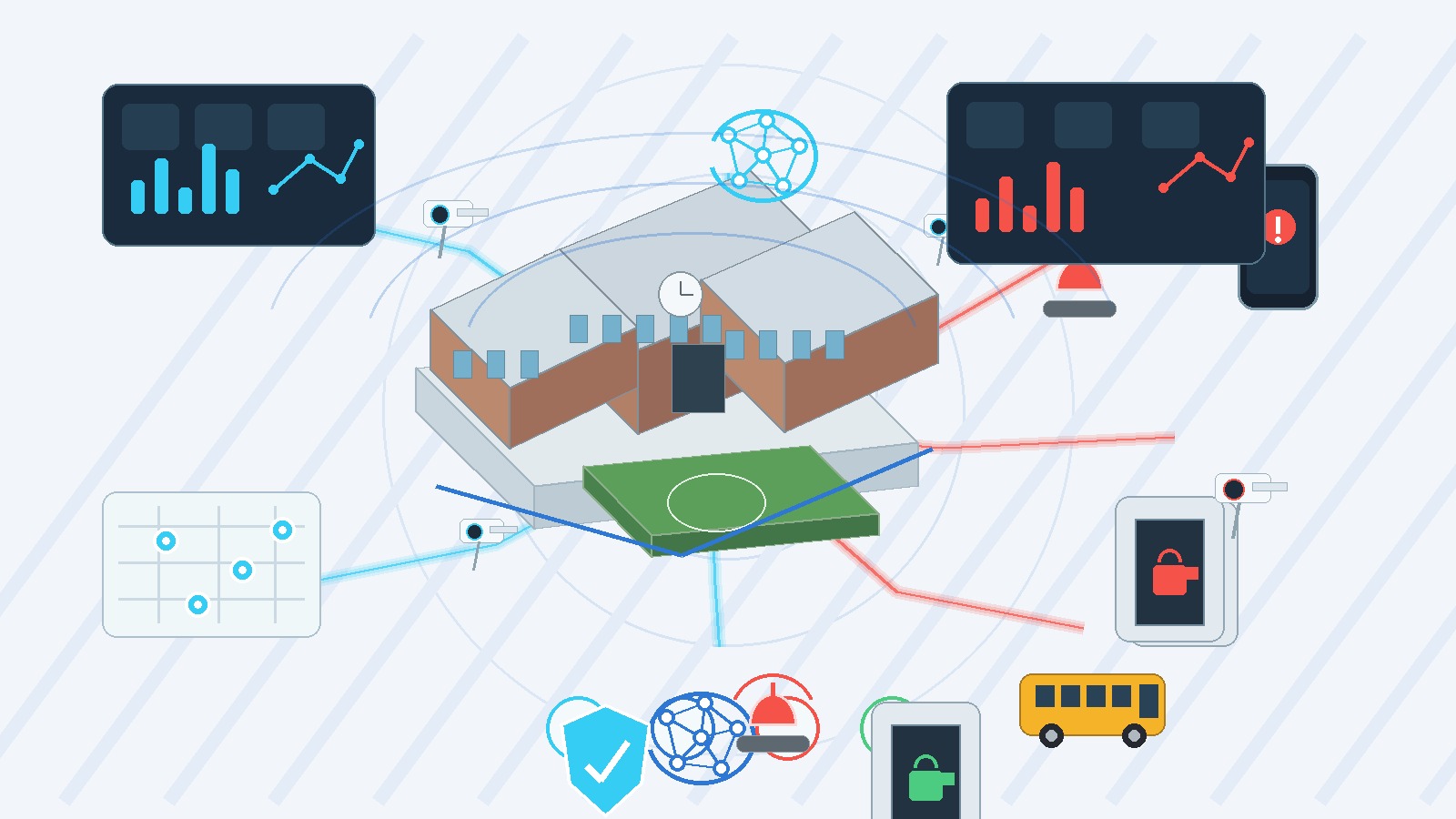
Proposed editorial positioning: to present this cape as an performance and audit infrastructure for policies defined by the school. Avoid promise of automatic detection of abuse or enforcement. The responsible thesis is more concrete: an integrated architecture can reduce orphan credentials, improve traceability and give controlled context to those who have to decide.
Sources
- U.S. Department of Education - "U.S. Department of Education Launches National K-12 Initiative to Protect Students from Adult Sexual Predators in Schools" - https://www.ed.gov/about/news/press-release/us-department-of-education-launches-national-k-12-initiative-protect-students-adult-sexual-predators-schools - published and revised on 2026-07-10 and consulted on 2026-07-20 .
Trust and limits
- High for the existence of the initiative, the 20 research and the final obligations: federal primary source.
- Means for the proposed operating model: an editorial interpretation based on common identity and access controls, and not an architecture required by OCR.
- That article did not offer legal advice. Decisions about employment, research and access restrictions require local policies, authorized officials and legal review.