
Clipxu
Platform
Solutions
News
View allAI-enabled extortion in K-12: preserve evidence without amplifying harmK-12 cyber-physical response: a plan that works when the network does notWhat an ANSI/ASIS standard adds to K-12 school security, and how to apply it to purchasing and operationsCritical incident mapping in K-12: from map to operational layer, lessons from IowaSinglewire 2026 report and a K-12 reading: the gap is not lack of technology, it is operationsGeorgia (HB 268): Alyssa's Alert, NG9-1-1, and school mapping as operational requirementsMississippi (SB 2498, 2026): from panic button to operational specificationOSDP in K-12: why Secure Channel + Verified changes the minimum access-control standardNIST opens an AI RMF profile for critical infrastructure: useful language for governing AI in school safetyPASS v7 and Digital Infrastructure: the new layer connecting access, video, panic, and IoT in K-12Third-party AI in school safety: an operational checklist to deploy it secure by default (2024-2025)Miami and the debate over funding security in private schoolsGovernance for AI + video in schools: from CCTV to assisted analytics without automated decisionsUtah and actionable response: wearable panic, PSAP, maps, and keys (UL 1037)West Virginia (HB 4798): Alyssa's Law and the move toward shareable safety dataAI video and access control: the convergence accelerating campus securityHow to choose school safety technology without falling into isolated purchasesSchool safety 2026: from panic buttons to orchestrated responseObservability and response: two key layers for school safety
AboutContact

Observability and response: two key layers for school safety

May 4, 2026

Modern school safety combines early detection, operational context, and clear response workflows to reduce decision time.
School safetyAIOperations
Observability and response: two key layers for school safety

From isolated alerts to operational context

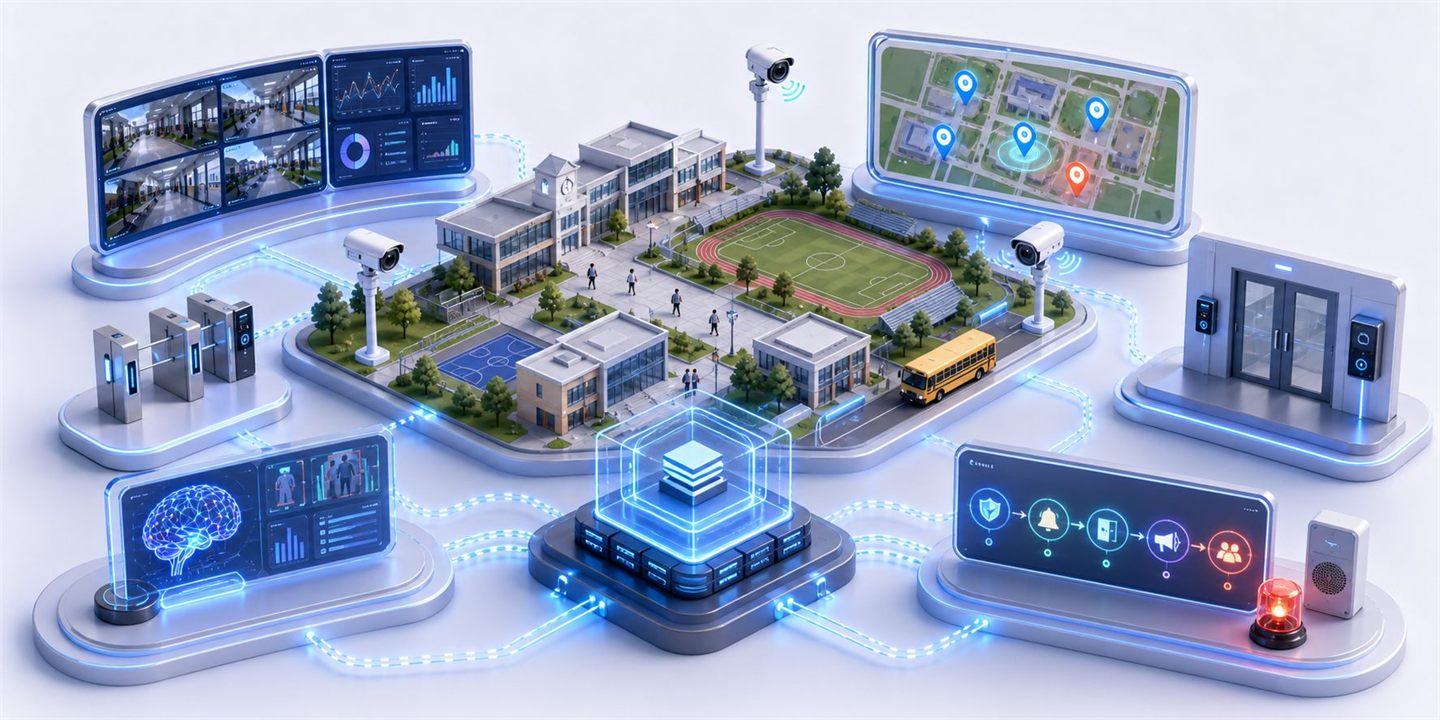
An alert is only useful when it arrives with enough context to act. On a school campus, that means knowing where the event is happening, which cameras or sensors were involved, which zones are nearby, and who needs to be notified.

Clipxu addresses this challenge by integrating AI analytics, Smart Location, and IoT into one operational layer. The goal is not to add noise, but to turn scattered signals into coordinated response.

What to watch in K12 trends

When evaluating school safety updates, it helps to separate three layers:

  • Detection: technologies that identify relevant events, such as restricted-zone presence, visible threats, or unauthorized access.
  • Context: information that helps interpret the alert, including location, schedule, history, and associated devices.
  • Response: workflows that turn an alert into verifiable actions, such as notifications, access lockdown, lights, sirens, or silent escalation.

Editorial criteria

Future updates in this section will prioritize verifiable sources, applicable lessons, and practical documentation for school leadership, technology, and safety teams.