
Detect visible weapons and urgent threats with AI-powered monitoring, rapid alerting, and policy-driven response.
Why it matters
Traditional school camera systems are reactive, often capturing evidence after an incident instead of helping teams respond before the situation escalates.
Clipxu solution
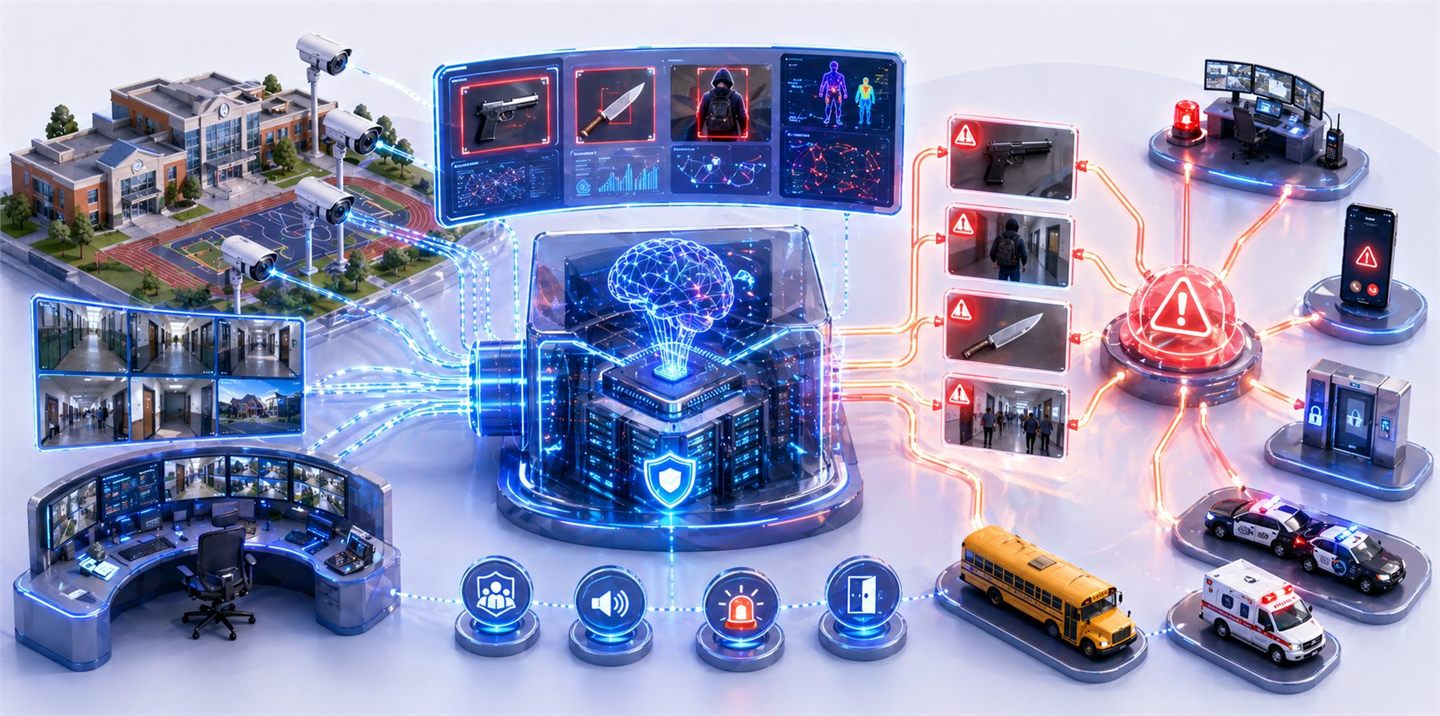
Clipxu combines live AI video analytics, alert verification, and policy-driven automation to turn school cameras into an active early warning system.
How it works
The AI engine continuously analyzes live video feeds to detect visible weapons and other urgent threats, then shares contextual alerts and can trigger automated emergency workflows.
Deployment model
Cloud-first or hybrid, with optional edge processing when schools require lower latency or local infrastructure support.
Key capabilities
- Detection of visible firearms such as handguns and rifles
- Instant alerts with location context for administrators and security staff
- Support for manual confirmation before full protocol activation
- Automated lockdown, notification, and escalation workflows
Ideal environments
Overview
Traditional security cameras are reactive, recording incidents after they occur. Clipxu changes that model by combining real-time AI video analytics with IoT automation, helping schools detect threats faster and accelerate emergency response when every second matters.
Threat detection
Clipxu's AI engine continuously monitors live video feeds across campus and can identify:
- Visible firearms such as handguns and rifles
- Unauthorized individuals in restricted areas
Unlike manual monitoring, Clipxu does not tire, lose focus, or wait for someone to notice a critical event.
Automated threat response protocol
1. Instant AI alert and verification
- Real-time notifications can be sent to administrators and security teams through mobile alerts and dashboards.
- Alerts can include AI-highlighted footage along with location context such as building, floor, and room.
2. Manual confirmation
- School staff can review AI-detected threats before full protocol activation when the policy requires verification.
- One-touch escalation can trigger the next stage of the emergency workflow.
3. Automated safety protocols
Once validated, Clipxu can initiate predefined emergency actions, such as:
- Locking doors in affected zones
- Activating emergency lights or connected alerts
- Sharing live context with responders
- Recording video evidence and event details