
June 22, 2026
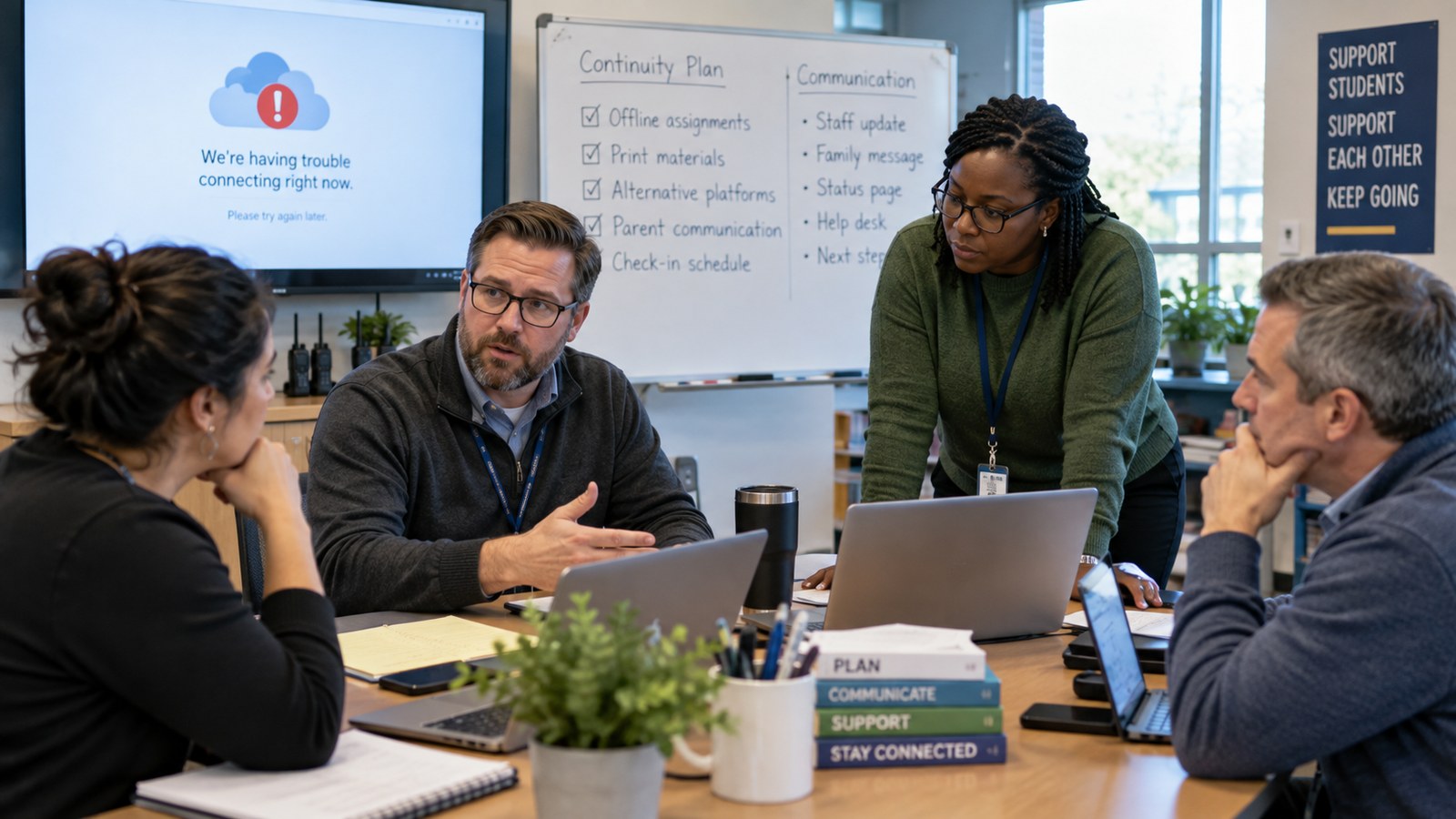
The June 11 Training's official update did not propose a new feature for schools but something more important: continuity, resilience and product changes after a serious incident. For K-12, useful reading is operational.
Summary
verified facts: Instructure maintains an official incident hub for Canvas with more recent visible update of 2026-06-11 . At that entry, the company indicates that I have added information for clients about continuity planning and resilience guidance best practices and with clarification about the individual and regulatory notification process. In an update of the 2026-06-08 , Instructure stated that Free-for-Teacher was permanently discontinued and that it prepares an improved product for former users of that service with an expected launch in otono. When viewing the status page the 2026-06-22 , the platform shown "All Systems Operating" .
Interpretation: The news isn't that the supplier "came back." The useful news for K-12 is that an incident in a widely used system ends up pushing three hard questions: continuity, product dependence and actual quality of the supplier's remedy plan.
Context
Facts (according to sources)
- The company continues to use a specific incident hub, not a closed note at once.
- The most recent language emphasizes continuity planning and resilience , not just technical restoration.
- The answer includes a product decision: close Free-for-Teacher and migrate to a different future offer.
- The status page no longer shown a general degradation of Canvas at the time of consultation.
What should not be inferred
The revised sources do not independently prove that the forensic assessment is closed and that any residual risks have been lost. Nor do they allow for precise monitoring of the specific impact in K-12 districts without additional disclosure by client or regulator.
Implications for K-12
- The continuity of the provider is already a criterion of school safety. If a platform falls or changes architecture after an incident, the school needs alternative routes for communication, training and evidence.
- Resilience cannot be left outside the procurement. It does not reach with applying for functionalities and we have to demand notification, continuity and recovery processes.
- Free or periferous products can become more fragile points. The closure of Free-for-Teacher forces to look at the risk of "secondary" dependencies.
- Visible operational status does not replace governance. That the board say "operative" does not remove the need to review contractual controls and post-incident response.
How it relates to Clipxu
Acts (about Clipxu): Clipxu works in flows where availability, traceability and interlayer co-ordination matter as much as the main function.
Retirement (proposed): using this case to explain that in K-12 environments a security or operation platform should be sold not only by its analyst or interface but by its capacity to sustain operational continuity , incident governance and contingency routes .
Sources
- Instructure - "Security Incident Update & FAQs": https://www.instructure.com/incident_update - with most recent update visible 2026-06-11 , consulted 2026-06-22 .
- Instructure - "Status": https://status.instructure.com/ - status page consulted 2026-06-22 .