
PASS v7 is the seventh edition of the Partner Alliance for Safer Schools guidelines for assessing and improving physical and technology-based security in K-12 schools.
What it means
PASS v7 refers to the seventh edition of the Safety and Security Guidelines for K-12 Schools from Partner Alliance for Safer Schools. It is a best-practice guide for school safety, not a federal law. Its value is that it organizes measures by layers, maturity levels, and control areas.
SchoolSafety.gov describes the edition as a best-practice reference for securing K-12 facilities, with a checklist that helps compare a district's safety posture against national practices. Version 7 expands areas such as secure entrances, duress alarm systems, and door devices.
What it covers
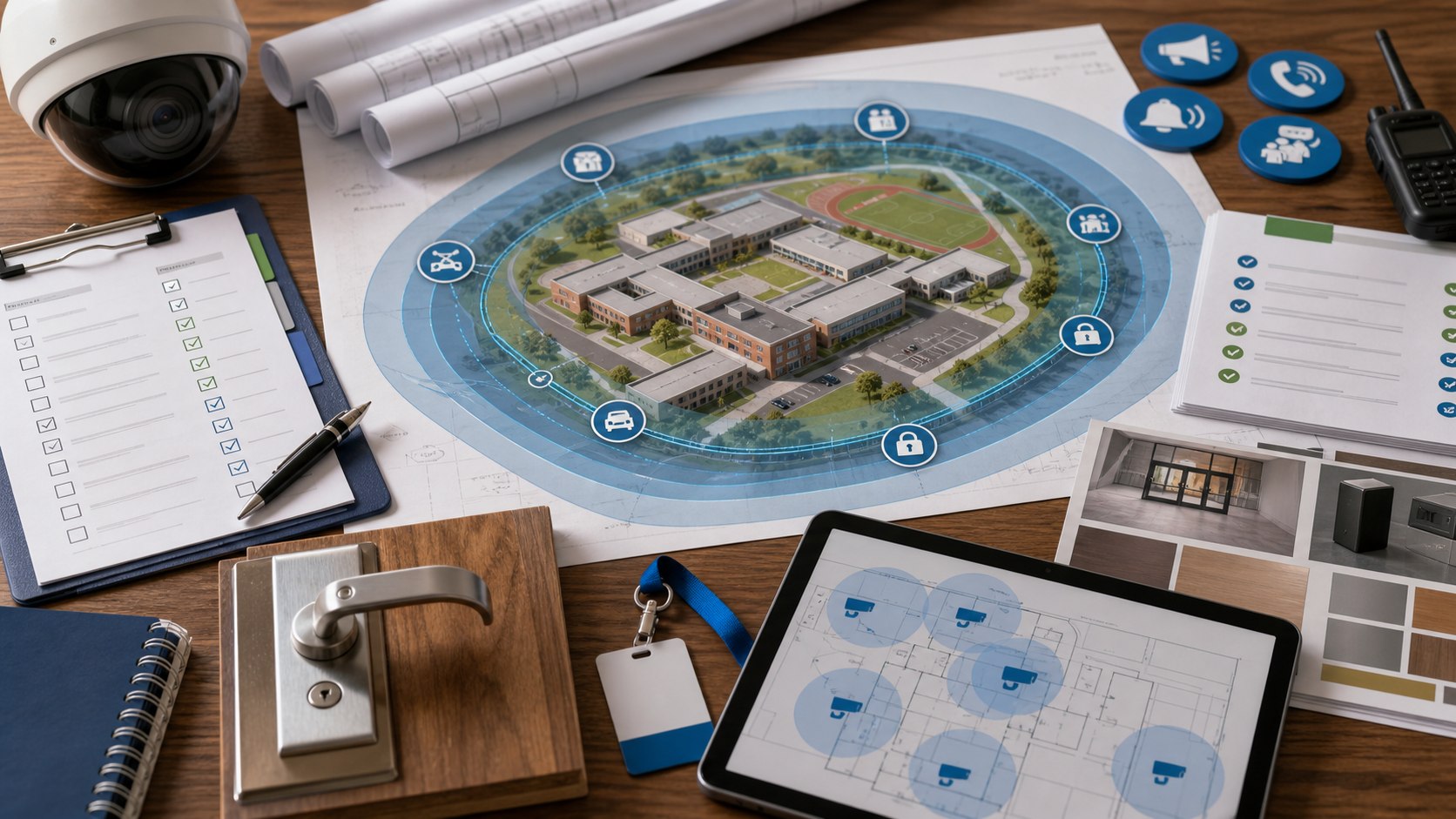
PASS organizes school security as a layered system. This includes:
- Policies, governance, and procedures.
- Access control and visitor management.
- Locks, doors, perimeters, and interior zones.
- Video surveillance and monitoring.
- Emergency communications and alerting.
- Detection, response, training, and continuous improvement.
Why it matters for K12
PASS helps avoid isolated decisions. Buying cameras, buttons, or locks without a layered architecture can create blind spots. The guide encourages schools to examine how each element supports a complete flow: prevent, detect, communicate, respond, and recover.
For Clipxu, PASS v7 provides common language with administrators, consultants, integrators, and public safety stakeholders. It helps explain where AI, Smart Location, Policy Manager, access control, IoT, and maps fit within a broader school program.
How to use it in an assessment
- Review gaps by building, not only by district.
- Prioritize risks by criticality and feasibility.
- Verify whether technology controls have procedures attached.
- Use the checklist as a baseline for roadmap and budget.
- Align implementation with training and maintenance.
Reference sources
- SchoolSafety.gov, PASS Safety and Security Guidelines for K-12 Schools, 7th Edition: https://www.schoolsafety.gov/resource/partner-alliance-safer-schools-pass-safety-and-security-guidelines-k-12-schools-7th
- Partner Alliance for Safer Schools: https://passk12.org/pass-recommendations/introducing-pass-guidelines-version-7/