
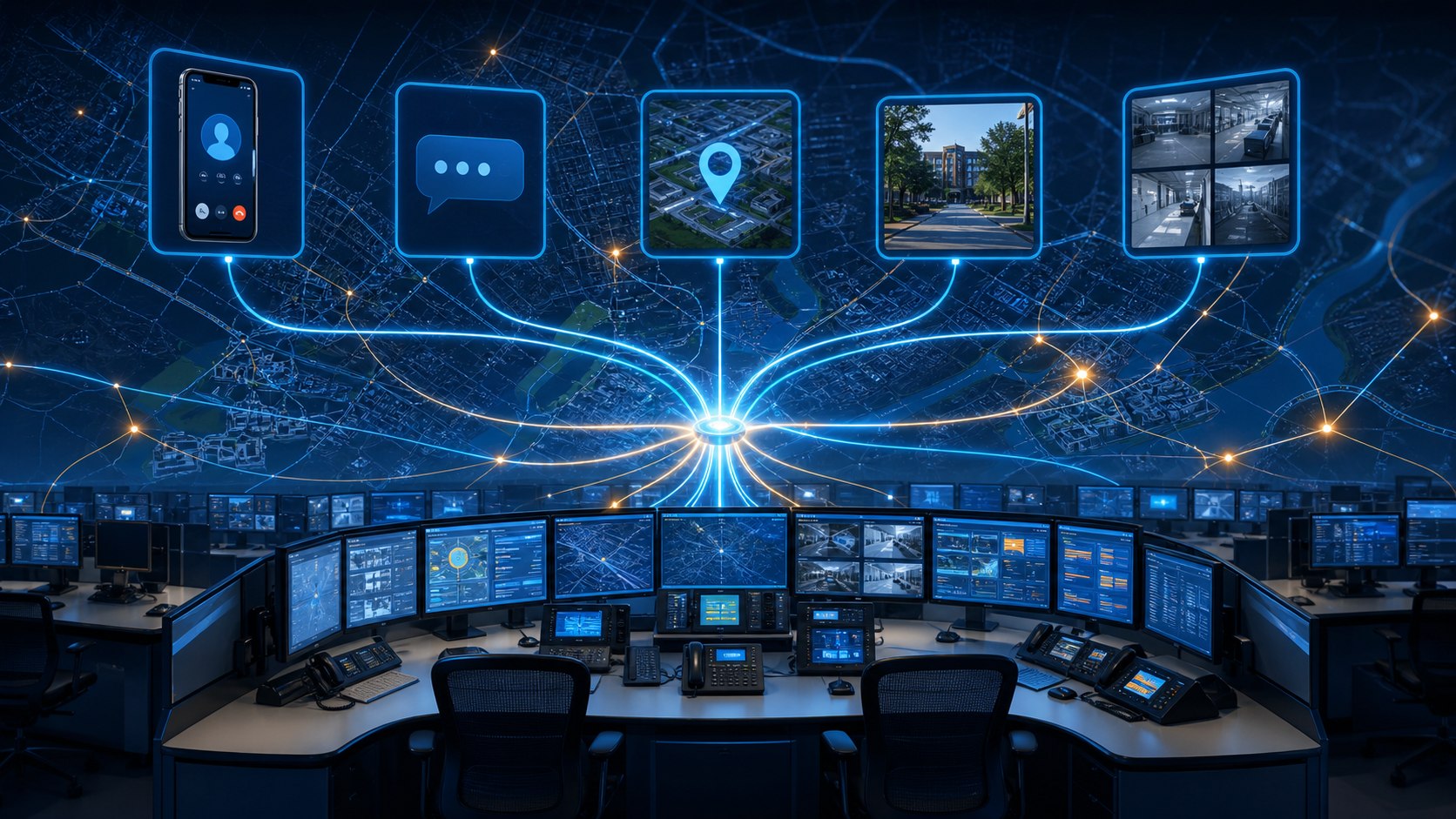
NG9-1-1, or Next Generation 911, is the transition from analog 911 to a digital IP-based network that can carry voice, text, data, photos, and video.
What it means
NG9-1-1 means Next Generation 911. It is the modernization of 911 toward a digital IP-based infrastructure. Unlike traditional 911, designed mainly for voice calls, NG9-1-1 allows the emergency network to handle more types of information and route incidents with greater resilience.
According to 911.gov, the transition is intended to improve the ability of 911 centers to receive and transfer voice, photos, video, text messages, and data, while also managing call overload, disasters, and location-based routing.
Key components
- ESInet: an emergency services IP network that transports emergency communications and data.
- NGCS: NG9-1-1 core services that process, route, and deliver calls or events.
- NENA i3: a technical architecture and standard widely used as an interoperability reference.
- GIS: geographic data used to route incidents and locate events accurately.
- PSAP: the public center that receives and processes emergency communications.
Why it matters for schools
A school can generate alerts with more context than a traditional call: indoor location, building map, threat type, associated camera, panic button data, and activated protocol. NG9-1-1 makes it possible for that context to travel in a more structured way to emergency systems, when the jurisdiction and its integrations support it.
This affects purchasing and design decisions. A K12 platform should not treat 911 as a single abstract destination, but as a local ecosystem with variable capabilities. Some counties or states are further along in NG9-1-1 than others.
Operational implications
- Validate with local authorities what data the PSAP can receive.
- Maintain normalized maps and addresses.
- Separate internal alerts from official 911 alerts when appropriate.
- Design fallback paths when a full digital channel is not available.
- Record activations, confirmations, and transfers for audit.
Reference sources
- 911.gov, Next Generation 911: https://www.911.gov/issues/ng911/
- NTIA, Next Generation 911: https://www.ntia.gov/category/next-generation-911
- NENA i3 as a technical reference for the NG9-1-1 ecosystem.