
ANSI/ASIS SSEC-2025 is a school security standard that establishes a framework for developing, implementing, and maintaining security programs in K-12 environments.
What it means
ANSI/ASIS SSEC-2025 is the ASIS International School Security standard approved as an American National Standard. According to the ANSI Webstore, it establishes a comprehensive framework for developing, implementing, and maintaining a school security program in K-12 environments.
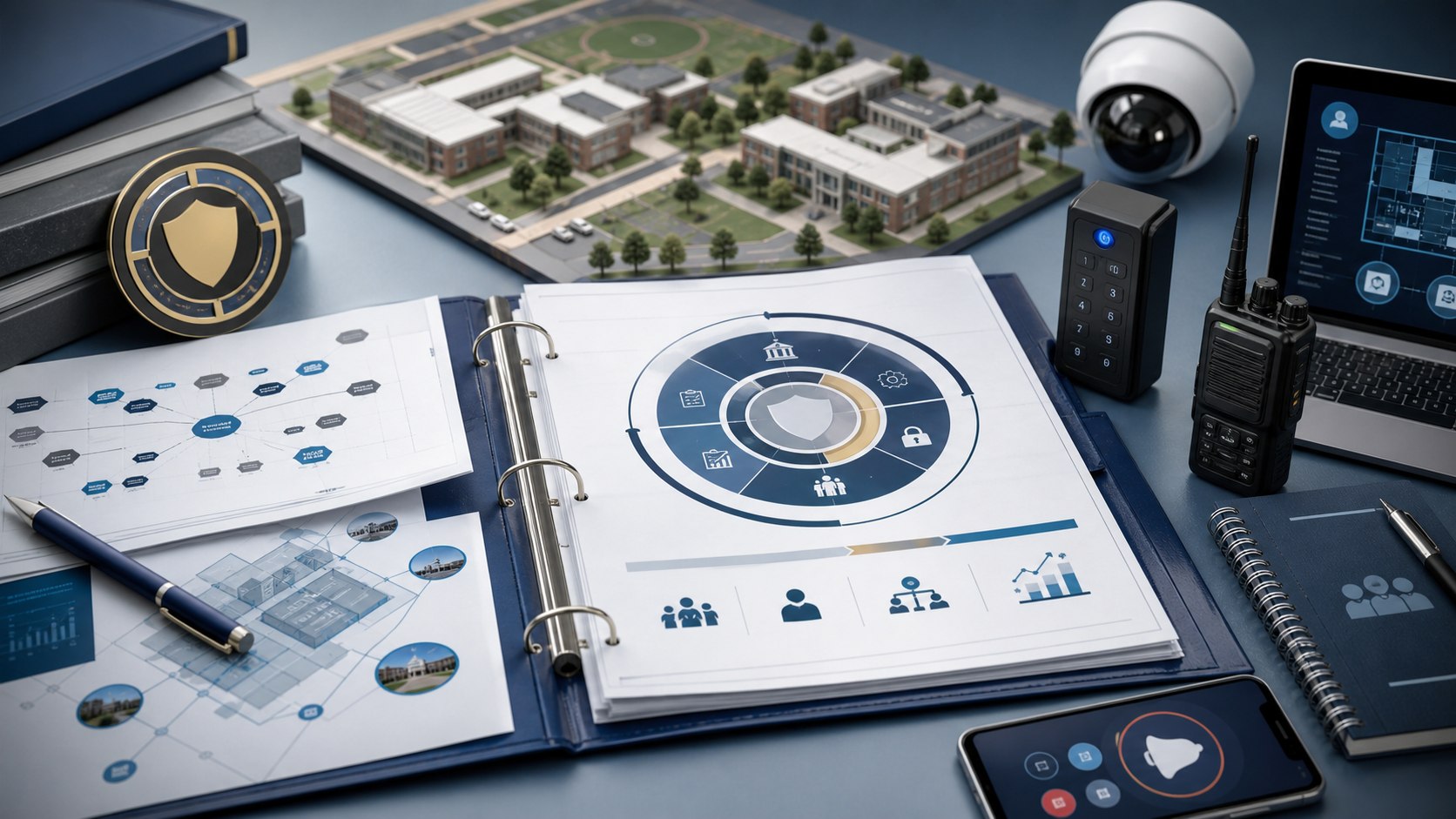
It should not be read as a product list. It is a program reference: it helps organize responsibilities, risk assessment, policies, coordination, physical measures, technology, training, and continuous improvement.
Why it matters
Schools often accumulate solutions under urgency: cameras, locks, access controls, radios, applications, buttons, and maps. A program standard helps connect those elements to verifiable safety objectives.
For a platform like Clipxu, this standard matters because it reinforces that technology must be integrated with governance and procedures. AI, IoT, and automation must operate within clear rules: who decides, who observes, who responds, how it is audited, and how it improves.
Typical topics in a school security program
- Risk and threat assessment.
- Roles and responsibilities of the district, school, and external partners.
- Access, visitor, and restricted-zone policies.
- Emergency communications and interagency coordination.
- Physical protection, monitoring, and technology controls.
- Training, exercises, and post-incident review.
Recommended use
The standard can serve as a maturity framework. Before buying or activating a function, the school can ask: what risk does it reduce, what procedure supports it, what data does it generate, who reviews it, and how is it tested under real conditions?
Reference sources
- ANSI Webstore, ASIS SSEC-2025 School Security: https://webstore.ansi.org/standards/asis/asisssec2025
- ANSI Approved American National Standards list, May 2026.