
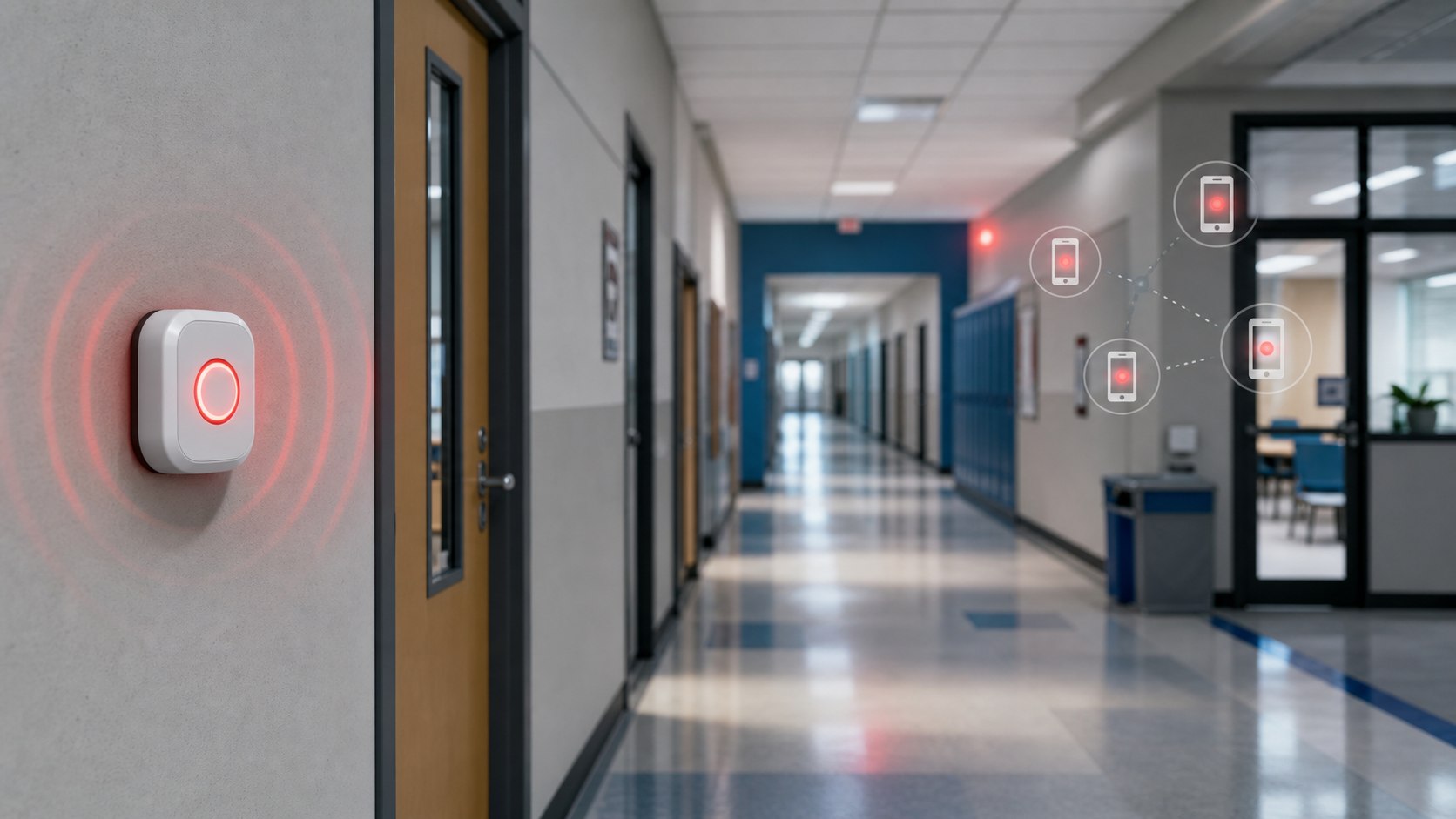
Alyssa's Law is a set of state laws that promote silent panic alarms in schools to reduce the time between a threat and emergency response.
What it means
Alyssa's Law refers to state laws inspired by Alyssa Alhadeff, a student killed in the Marjory Stoneman Douglas High School shooting in Parkland, Florida, on February 14, 2018. Its purpose is to let schools activate a silent alarm during an emergency and quickly notify law enforcement or emergency response services.
There is no single uniform national implementation. Each state defines scope, covered schools, technical requirements, funding, testing, coordination with local authorities, and reporting obligations. In some states the rule requires alarm systems; in others it requires schools to consider or include alert mechanisms in their safety plans.
What it requires in practice
In an operational architecture, Alyssa's Law usually translates into capabilities such as:
- Panic buttons or devices accessible to authorized staff.
- Silent activation so the situation is not escalated inside the campus.
- Immediate alert delivery to school security, dispatch, local police, or the PSAP, depending on local rules.
- Location context that identifies the building, floor, classroom, or affected zone.
- Integration with digital maps, lockdown protocols, internal notifications, and event logs.
- Periodic training and testing to reduce false alarms and ensure response readiness.
Why it matters for K12
The law moves the discussion from "having a button" to guaranteeing a complete response chain. A school system may formally comply with an alarm requirement and still fail operationally if the alert lacks location, does not reach the correct entity, does not activate an internal protocol, or is not recorded for audit.
For Clipxu, this concept matters because it connects panic button, Policy Manager, Smart Location, maps, and coordinated response. Technology should reduce friction: activate the alert, add context, and move the right actors without depending on manual calls during the first seconds.
Implementation risks
- Designing only for compliance rather than real operation.
- Not validating compatibility with the PSAP, local dispatch, school police, or 911 authority.
- Using location data that is too generic for large campuses.
- Not defining who can activate, cancel, confirm, or escalate an alert.
- Omitting training, drills, and maintenance of batteries or connectivity.
Reference sources
- Make Our Schools Safe: https://makeourschoolssafe.org/
- New Jersey Administrative Code on Alyssa's Law: https://www.law.cornell.edu/regulations/new-jersey/N-J-A-C-19-32A-1-1
- Applicable state legislation and regulations by jurisdiction.